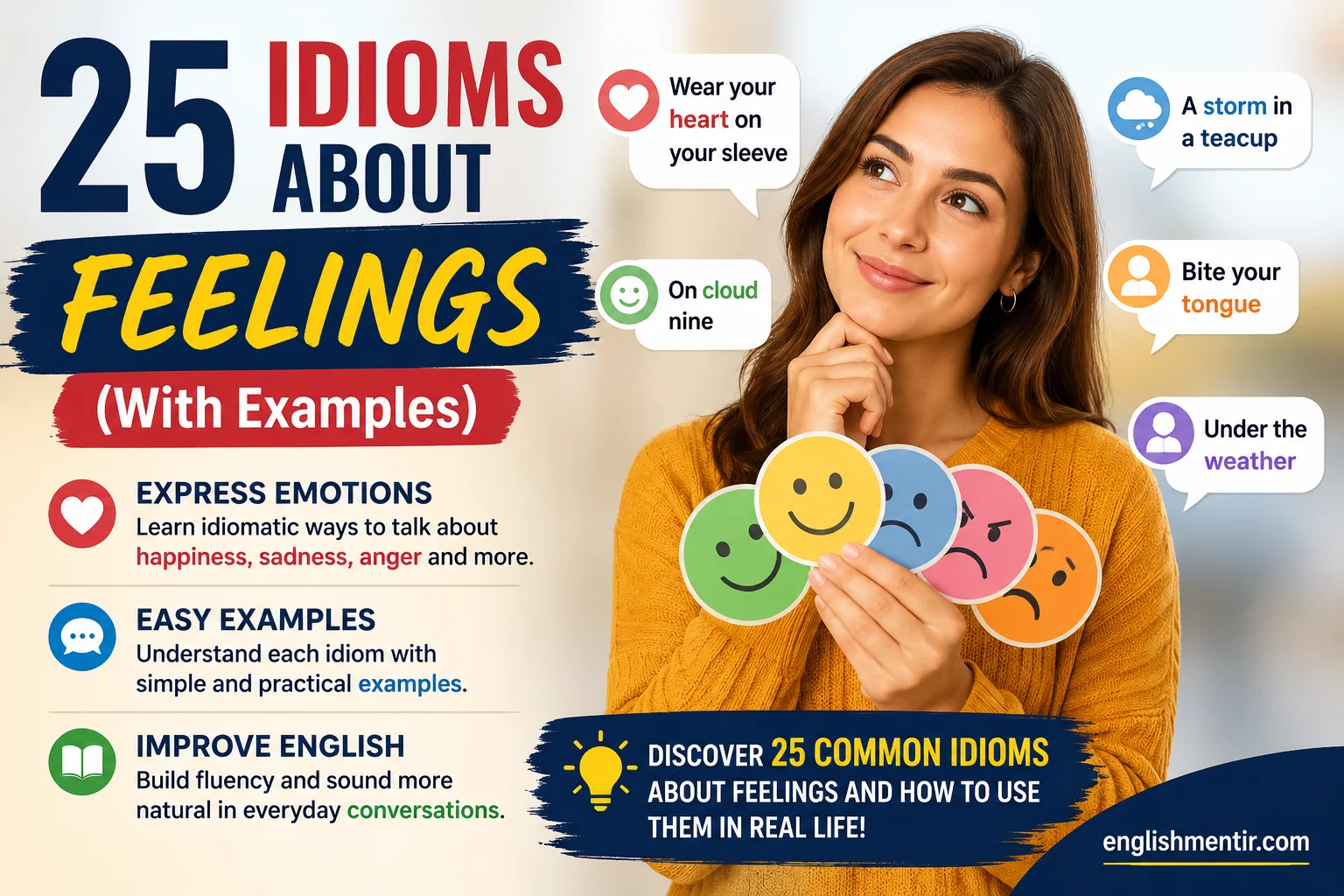
Discover 25 Idioms About Feelings (With Examples) to express emotions naturally, make your English more colorful, and speak with confidence today!
Idioms are an essential part of the English language, and 25 Idioms About Feelings (With Examples) makes everyday conversations more colorful, expressive, and interesting. Instead of explaining a feeling in a plain or simple way, these special phrases help us express and describe feelings and emotions more creatively, naturally, and differently, much like native speakers. For example, butterflies in your stomach does not mean real butterflies are inside you; its meaning can describe being nervous or excited. From positive and joyful days to negative moments when someone feels angry or completely stressed out, common idioms add color, emotion, depth, and fun to speaking, writing, and speech.
In my experience, learning and using idioms through practice helps make English more fluent, diverse, relatable, and memorable, while allowing us to connect with others, understand stories, books, and conversations, and share our joys and sorrows with loved ones and friends. Explore these words every day when talking about how you feel; speak about being happy, bask in positive emotions, and remember that emotions help make us alive. Give attention to English idioms as you learn English online, use this article as a chance to build your collection, improve your daily English, and enjoy expressing ourselves through creative ways. Dive in, explore these expressions, and use them in real life to make your English sound more natural.
1. Over the Moon
Meaning: To feel extremely happy, excited, or delighted about something.
In a Sentence:
She was over the moon when she received the good news.
Other Ways to Say:
- Extremely happy
- Thrilled
- Delighted
- On top of the world
2. On Cloud Nine
Meaning: To feel very happy and joyful, often because something wonderful has happened.
In a Sentence:
He was on cloud nine after winning the competition.
Other Ways to Say:
- Very happy
- Ecstatic
- Delighted
- Walking on air
3. Down in the Dumps
Meaning: To feel sad, discouraged, or unhappy.
In a Sentence:
I felt down in the dumps after my plans were canceled.
Other Ways to Say:
- Feeling low
- Feeling sad
- Discouraged
- Unhappy
4. Have a Heavy Heart
Meaning: To feel sad, worried, or emotionally burdened.
In a Sentence:
She left the house with a heavy heart after saying goodbye to her friends.
Other Ways to Say:
- Feel deeply sad
- Feel troubled
- Feel sorrowful
- Feel emotionally burdened
5. Lose Your Temper
Meaning: To suddenly become angry or upset.
In a Sentence:
Try not to lose your temper when someone makes a mistake.
Other Ways to Say:
- Get angry
- Become upset
- Blow up
- Become furious
6. Have a Change of Heart
Meaning: To change your feelings, opinion, or decision about something.
In a Sentence:
He had a change of heart and decided to forgive his friend.
Other Ways to Say:
- Change your mind
- Reconsider
- Think differently
- Change your feelings
7. Green with Envy
Meaning: To feel very jealous of another person’s success, possessions, or situation.
In a Sentence:
She was green with envy when she saw her friend’s new car.
Other Ways to Say:
- Very jealous
- Envious
- Resentful
- Want what someone else has
8. Have Butterflies in Your Stomach
Meaning: To feel nervous or excited, especially before an important event.
In a Sentence:
I had butterflies in my stomach before giving my presentation.
Other Ways to Say:
- Feel nervous
- Feel anxious
- Feel excited
- Have nervous feelings
9. Keep Your Chin Up
Meaning: To remain positive and hopeful during a difficult situation.
In a Sentence:
Keep your chin up; things will get better soon.
Other Ways to Say:
- Stay positive
- Stay hopeful
- Don’t give up
- Remain strong
10. Blow Off Steam
Meaning: To release anger, frustration, or stress in a healthy way.
In a Sentence:
I went for a walk to blow off steam after a stressful day.
Other Ways to Say:
- Release frustration
- Calm down
- Let your feelings out
- Reduce stress
11. Have a Soft Spot for Someone
Meaning: To have a special feeling of affection or fondness for someone.
In a Sentence:
My grandmother has a soft spot for her youngest grandson.
Other Ways to Say:
- Feel affection for
- Care deeply about
- Be fond of
- Have a special place for
12. Wear Your Heart on Your Sleeve
Meaning: To show your feelings openly instead of hiding them.
In a Sentence:
She wears her heart on her sleeve, so everyone knows how she feels.
Other Ways to Say:
- Show your emotions
- Be emotionally open
- Express yourself freely
- Be honest about your feelings
13. Get Cold Feet
Meaning: To suddenly become nervous or afraid about doing something.
In a Sentence:
He got cold feet just before giving his speech.
Other Ways to Say:
- Become nervous
- Lose confidence
- Feel afraid
- Have second thoughts
14. Bottle Up Your Feelings
Meaning: To hide or suppress emotions instead of expressing them.
In a Sentence:
It’s unhealthy to bottle up your feelings for too long.
Other Ways to Say:
- Hide your emotions
- Suppress your feelings
- Keep feelings inside
- Avoid expressing yourself
Read more: 25 Idioms About Cake (With Examples)
15. Cry Your Eyes Out
Meaning: To cry a lot because of sadness, pain, or disappointment.
In a Sentence:
She cried her eyes out after hearing the heartbreaking news.
Other Ways to Say:
- Cry heavily
- Weep
- Sob
- Cry uncontrollably
16. Jump for Joy
Meaning: To show great happiness and excitement.
In a Sentence:
The children jumped for joy when they heard about the surprise trip.
Other Ways to Say:
- Celebrate happily
- Be extremely excited
- Rejoice
- Be thrilled
17. Have Mixed Feelings
Meaning: To experience different or conflicting emotions about something.
In a Sentence:
I have mixed feelings about moving to another city.
Other Ways to Say:
- Feel conflicted
- Have conflicting emotions
- Feel uncertain
- Feel torn
18. Be Sick with Worry
Meaning: To feel extremely worried or anxious about something.
In a Sentence:
Her parents were sick with worry when she didn’t come home on time.
Other Ways to Say:
- Be extremely worried
- Feel anxious
- Be deeply concerned
- Worry intensely
19. Take Something to Heart
Meaning: To become deeply affected or hurt by something someone says or does.
In a Sentence:
Don’t take his criticism to heart; he didn’t mean to hurt you.
Other Ways to Say:
- Feel hurt
- Take personally
- Feel deeply affected
- Be sensitive to something
20. Have Your Heart in Your Mouth
Meaning: To feel extremely nervous, frightened, or anxious about what is happening.
In a Sentence:
My heart was in my mouth when I watched the final seconds of the game.
Other Ways to Say:
- Feel terrified
- Feel extremely nervous
- Be anxious
- Be frightened
21. Be in High Spirits
Meaning: To be in a cheerful, happy, and energetic mood.
In a Sentence:
Everyone was in high spirits during the family celebration.
Other Ways to Say:
- Feel cheerful
- Be happy
- Be upbeat
- Be in a great mood
22. Lose Heart
Meaning: To become discouraged or lose hope.
In a Sentence:
Don’t lose heart if you don’t succeed on your first attempt.
Other Ways to Say:
- Lose hope
- Become discouraged
- Give up emotionally
- Feel defeated
23. Pour Your Heart Out
Meaning: To share your deepest thoughts and feelings honestly with someone.
In a Sentence:
She poured her heart out to her best friend after the difficult day.
Other Ways to Say:
- Open up
- Share your feelings
- Speak honestly
- Talk from the heart
24. Have a Bone to Pick
Meaning: To feel annoyed or upset with someone and want to discuss the problem.
In a Sentence:
I have a bone to pick with you about what happened yesterday.
Other Ways to Say:
- Be upset with someone
- Have a complaint
- Want to discuss an issue
- Be annoyed
25. Walk on Air
Meaning: To feel extremely happy or excited.
In a Sentence:
She was walking on air after hearing that she got the job.
Other Ways to Say:
- Feel wonderful
- Be delighted
- Be overjoyed
- Be extremely happy
Exercise: Practice Idioms About Feelings
1. What does “over the moon” mean?
A. Very tired
B. Extremely happy
C. Very angry
D. Deeply worried
2. If someone is “down in the dumps,” how do they feel?
A. Excited
B. Confident
C. Sad
D. Proud
3. What does “lose your temper” mean?
A. Become angry
B. Become sleepy
C. Become excited
D. Become confused
4. Someone with “butterflies in their stomach” probably feels:
A. Hungry
B. Nervous or excited
C. Angry
D. Bored
5. What does “green with envy” describe?
A. Happiness
B. Jealousy
C. Fear
D. Surprise
6. If you “keep your chin up,” you should:
A. Give up
B. Stay positive
C. Become angry
D. Avoid people
7. What does it mean to “bottle up your feelings”?
A. Express emotions openly
B. Hide or suppress emotions
C. Celebrate
D. Forget an event
8. Someone who “wears their heart on their sleeve”:
A. Hides every emotion
B. Shows feelings openly
C. Avoids relationships
D. Gets angry quickly
9. What does “get cold feet” mean?
A. Feel nervous about doing something
B. Feel physically cold
C. Become very happy
D. Become sleepy
10. If you “pour your heart out,” you:
A. Hide your feelings
B. Share your deepest feelings
C. Become angry
D. Change your opinion
11. What does “jump for joy” mean?
A. Feel frightened
B. Feel extremely happy
C. Feel disappointed
D. Feel embarrassed
12. If you have “mixed feelings,” you:
A. Feel only happiness
B. Feel different emotions at once
C. Feel completely calm
D. Feel angry
13. What does “take something to heart” mean?
A. Ignore it completely
B. Be deeply affected by it
C. Laugh about it
D. Forget it immediately
14. Someone who is “in high spirits” is:
A. Cheerful
B. Furious
C. Frightened
D. Exhausted
15. What does “lose heart” mean?
A. Become discouraged
B. Become excited
C. Become wealthy
D. Become curious
Answers
- B — Extremely happy
- C — Sad
- A — Become angry
- B — Nervous or excited
- B — Jealousy
- B — Stay positive
- B — Hide or suppress emotions
- B — Shows feelings openly
- A — Feel nervous about doing something
- B — Share your deepest feelings
- B — Feel extremely happy
- B — Feel different emotions at once
- B — Be deeply affected by it
- A — Cheerful
- A — Become discouraged
FAQs
1. What are idioms about feelings?
Idioms about feelings are special expressions used to describe emotions such as happiness, sadness, anger, nervousness, and excitement in a more colorful and natural way.
2. Why should I learn idioms about feelings?
Learning these idioms can improve your English speaking, writing, and understanding of everyday conversations, stories, and books.
3. Can I use feeling idioms in daily conversations?
Yes, you can use these common idioms in daily English to express how you feel and make your speech sound more natural and expressive.
4. Are idioms difficult to learn?
Some idioms may seem difficult at first, but regular practice and learning their meanings through examples can make them easier to remember and use.
5. How can I remember idioms about emotions?
Try using idioms in your own sentences, conversations, and writing. The more you practice and use them in real-life situations, the easier they become to remember.
Conclusion
Learning 25 Idioms About Feelings (With Examples) can make your English more interesting, expressive, and natural. These idioms help you describe different feelings and emotions in a simple yet memorable way.
With regular practice, you can confidently use these expressions in daily conversations, writing, and other real-life situations. Start using these common idioms to share your emotions and communicate more effectively.













1 thought on “25 Idioms About Feelings (With Examples)”