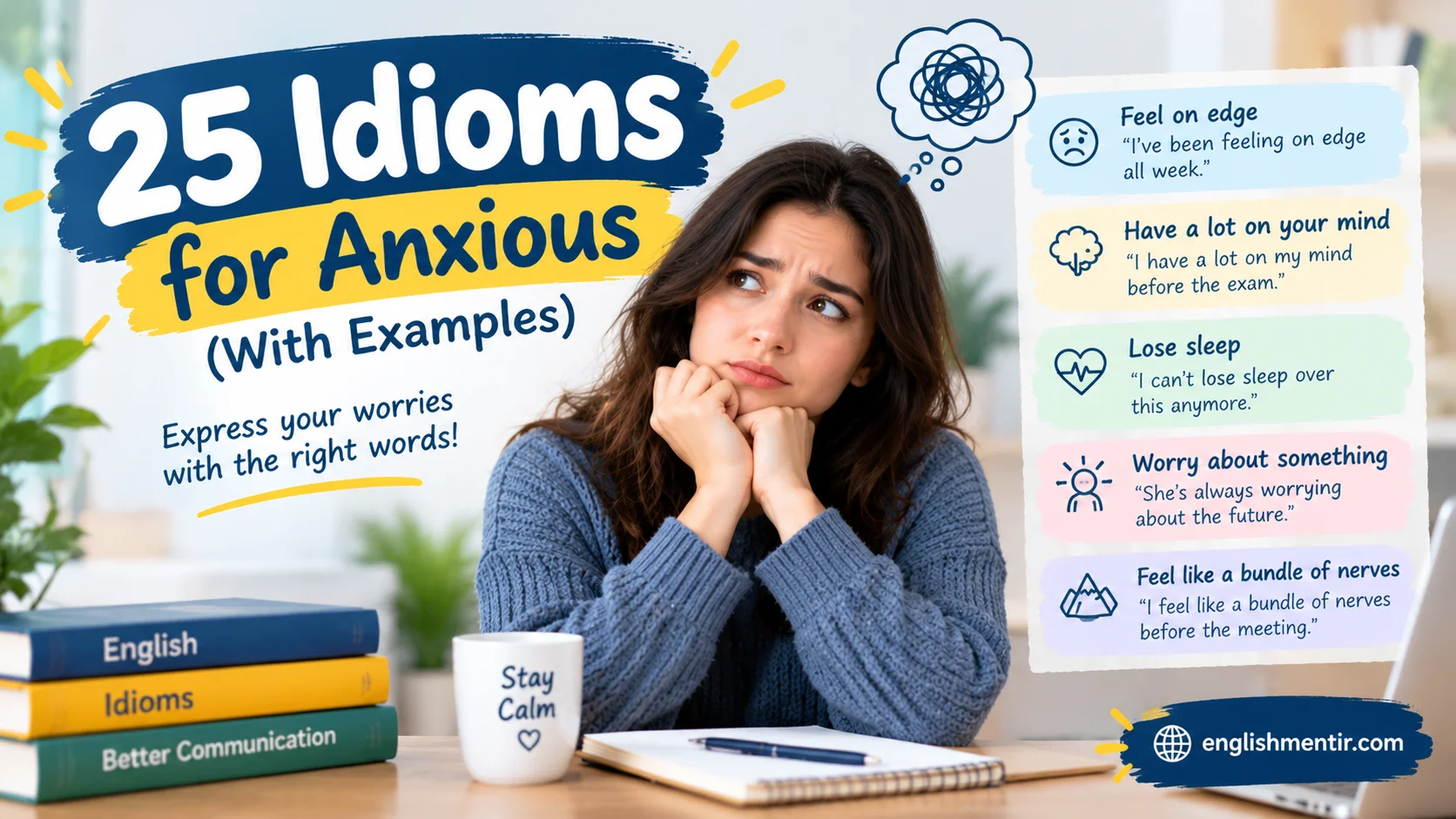
25 Idioms for Anxious (With Examples) help English learners find colorful ways to describe anxious feelings, including worry, nervousness, stress, tension, and fear. These idioms for anxious feelings make English more vivid, relatable, and memorable, helping you express emotions naturally in conversation and writing. They are useful at school, work, interviews, exams, and in everyday life, while also improving confidence and communication.
Common anxious idioms use indirect and emotional ways to capture anxious moments. Being on edge before a big presentation or having butterflies in your stomach can describe nervous feelings without using dull or repetitive words. Their meanings, examples, origins, and practical uses show how native speakers communicate emotions in real-life situations, from mild nervousness to stronger worry.
Learning these practical idioms for anxious feelings can transform how you express worry during stressful situations. The right words can make communication warmer by showing care and empathy when someone is struggling. In my experience, using the right expression while writing a message, speaking with a friend, or improving English helps you connect better with others and makes everyday conversations more expressive, thoughtful, and natural.
1. On Edge
Meaning: To feel nervous, tense, or unable to relax because something is worrying you.
In a Sentence: I have been on edge all morning because I am waiting for the interview results.
Other Ways to Say: Nervous, tense, uneasy, restless, worried
2. Have Butterflies in Your Stomach
Meaning: To feel nervous or excited, especially before an important event.
In a Sentence: I had butterflies in my stomach before walking onto the stage.
Other Ways to Say: Feel nervous, feel jittery, feel excited, feel uneasy
3. Bite Your Nails
Meaning: To feel or show anxiety and worry, often while waiting for something.
In a Sentence: She was biting her nails while waiting for the doctor to call.
Other Ways to Say: Worry, feel nervous, fret, feel tense
4. Lose Sleep Over Something
Meaning: To worry so much about something that it affects your sleep.
In a Sentence: Try not to lose sleep over a small mistake at work.
Other Ways to Say: Worry about, stress over, obsess about, feel troubled by
5. Have a Lump in Your Throat
Meaning: To experience a strong emotional feeling that makes it difficult to speak comfortably.
In a Sentence: I had a lump in my throat when I heard the difficult news.
Other Ways to Say: Feel emotional, struggle to speak, feel overwhelmed, feel choked up
6. Sweating Bullets
Meaning: To feel extremely nervous or frightened.
In a Sentence: He was sweating bullets while waiting for his turn to give the presentation.
Other Ways to Say: Terrified, extremely nervous, panicked, frightened
7. Have Cold Feet
Meaning: To become nervous or uncertain about something you had already decided to do.
In a Sentence: She got cold feet before giving her speech to the entire class.
Other Ways to Say: Become hesitant, lose confidence, feel unsure, have doubts
8. Jump Out of Your Skin
Meaning: To be extremely startled, nervous, or frightened.
In a Sentence: That sudden noise nearly made me jump out of my skin.
Other Ways to Say: Be startled, feel frightened, panic, be shocked
9. A Bundle of Nerves
Meaning: A person who is extremely nervous or anxious.
In a Sentence: I was a bundle of nerves before my first job interview.
Other Ways to Say: Very nervous, tense person, worried, highly anxious
10. Worry Yourself Sick
Meaning: To worry intensely about something until it affects your physical or emotional well-being.
In a Sentence: Don’t worry yourself sick about something you cannot control.
Other Ways to Say: Worry excessively, stress out, overthink, become overwhelmed
11. Have a Knotted Stomach
Meaning: To feel strong nervousness or worry in your stomach.
In a Sentence: I had a knotted stomach before opening the exam results.
Other Ways to Say: Feel nervous, feel tense, have stomach anxiety, feel uneasy
12. Keep Your Fingers Crossed
Meaning: To hope for a positive result while feeling uncertain about what will happen.
In a Sentence: I am keeping my fingers crossed that everything goes well tomorrow.
Other Ways to Say: Hope for the best, remain hopeful, wish for good luck
13. Walk on Eggshells
Meaning: To behave very carefully because you are worried about upsetting someone or causing a problem.
In a Sentence: I feel like I am walking on eggshells whenever we discuss that sensitive topic.
Other Ways to Say: Be cautious, tread carefully, act carefully, feel uncomfortable
14. Have Your Heart in Your Mouth
Meaning: To feel very nervous or frightened, especially while waiting for something important to happen.
In a Sentence: I had my heart in my mouth when the car suddenly stopped.
Other Ways to Say: Feel terrified, feel anxious, be frightened, feel tense
15. Shake in Your Boots
Meaning: To feel extremely frightened or nervous.
In a Sentence: The thought of speaking in front of hundreds of people had me shaking in my boots.
Other Ways to Say: Be terrified, tremble with fear, feel scared, panic
16. In a Tizzy
Meaning: To be very worried, excited, or upset about something.
In a Sentence: She was in a tizzy because she could not find her passport.
Other Ways to Say: Upset, anxious, flustered, agitated
17. Have a Lot on Your Mind
Meaning: To have many worries or problems occupying your thoughts.
In a Sentence: He has a lot on his mind because of the upcoming deadline.
Other Ways to Say: Be worried, feel burdened, have concerns, overthink
18. Freak Out
Meaning: To become very anxious, frightened, or upset.
In a Sentence: Try not to freak out before you know what actually happened.
Other Ways to Say: Panic, become anxious, lose control, become distressed
19. Lose Your Nerve
Meaning: To suddenly lose confidence or courage because you become nervous or afraid.
In a Sentence: I almost lost my nerve before stepping onto the stage.
Other Ways to Say: Lose confidence, become hesitant, feel afraid, back down
20. Sweat It Out
Meaning: To experience a period of anxiety or uncertainty while waiting for an outcome.
In a Sentence: We had to sweat it out until the final results were announced.
Other Ways to Say: Wait anxiously, endure uncertainty, worry, wait nervously
21. Have a Pit in Your Stomach
Meaning: To have an uncomfortable feeling caused by fear, worry, or nervous anticipation.
In a Sentence: I had a pit in my stomach before opening the email.
Other Ways to Say: Feel uneasy, feel worried, feel nervous, have a sinking feeling
22. Be Up in Arms
Meaning: To be very upset or angry about something.
In a Sentence: The residents were up in arms about the sudden change in the schedule.
Other Ways to Say: Be upset, be angry, protest, be deeply concerned
23. Get Worked Up
Meaning: To become very worried, upset, or emotional about something.
In a Sentence: Try not to get worked up about a problem that can still be solved.
Other Ways to Say: Become anxious, become upset, stress out, become emotional
24. A Nervous Wreck
Meaning: Someone who is extremely anxious, worried, or stressed.
In a Sentence: I was a nervous wreck while waiting for the final interview decision.
Other Ways to Say: Extremely anxious, very stressed, highly nervous, emotionally overwhelmed
25. Feel the Pressure
Meaning: To experience stress or anxiety because of expectations, responsibilities, or an important situation.
In a Sentence: She started to feel the pressure as the competition became more intense.
Other Ways to Say: Feel stressed, feel anxious, feel overwhelmed, feel under pressure
How to Choose the Right Idiom for Anxious Feelings
The best idiom for anxious feelings depends on the situation. For ordinary nervousness, expressions such as “on edge” and “butterflies in your stomach” sound natural. For stronger fear, “sweating bullets,” “shaking in your boots,” or “jumping out of your skin” can communicate greater intensity.
When someone is worried about an uncertain result, “sweat it out,” “lose sleep over something,” and “keep your fingers crossed” may fit better. If you want to sound caring, choose an expression that matches the person’s emotional state rather than making the feeling seem bigger than it is.
Here is the same exercise with each question formatted as an H3 subheading:
Exercise to Practice: 15 MCQs
1. What does “on edge” mean?
A. Very relaxed
B. Nervous or tense
C. Extremely happy
D. Completely confused
2. Which idiom describes nervous excitement before an important event?
A. Lose sleep over something
B. Walk on eggshells
C. Have butterflies in your stomach
D. Be up in arms
3. If someone is “sweating bullets,” they are:
A. Feeling sleepy
B. Feeling relaxed
C. Extremely nervous or frightened
D. Feeling hungry
4. What does “get cold feet” mean?
A. Feel physically cold
B. Become nervous about doing something
C. Run away quickly
D. Become very energetic
5. Which idiom means to worry so much that you cannot sleep?
A. Freak out
B. Feel the pressure
C. Lose sleep over something
D. Keep your fingers crossed
6. Someone who is “a bundle of nerves” is:
A. Extremely nervous
B. Very confident
C. Very tired
D. Completely calm
7. What does “walk on eggshells” mean?
A. Move very quickly
B. Act carefully to avoid upsetting someone
C. Feel very excited
D. Avoid going outside
8. Which expression means to hope that something will have a positive result?
A. Bite your nails
B. Lose your nerve
C. Keep your fingers crossed
D. Freak out
9. What does “lose your nerve” mean?
A. Forget your name
B. Lose confidence or courage
C. Become angry
D. Feel sleepy
10. If you “freak out,” you:
A. Calm down
B. Become very anxious or upset
C. Fall asleep
D. Become more confident
11. What does “a nervous wreck” describe?
A. A relaxed person
B. A successful person
C. A very anxious or stressed person
D. A person who is confused about directions
12. Which idiom means to have many worries occupying your thoughts?
A. Shake in your boots
B. Have a lot on your mind
C. Jump out of your skin
D. Sweat it out
13. “Have a pit in your stomach” usually describes:
A. An uncomfortable feeling caused by worry or fear
B. Feeling hungry
C. Feeling sleepy
D. Feeling proud
14. Which expression means to wait anxiously for an uncertain result?
A. Get worked up
B. Sweat it out
C. Bite your nails
D. Be up in arms
15. What does “feel the pressure” mean?
A. Feel physically pushed
B. Experience stress because of expectations or responsibilities
C. Feel completely relaxed
D. Become distracted by music
Answers
- B — Nervous or tense
- C — Have butterflies in your stomach
- C — Extremely nervous or frightened
- B — Become nervous about doing something
- C — Lose sleep over something
- A — Extremely nervous
- B — Act carefully to avoid upsetting someone
- C — Keep your fingers crossed
- B — Lose confidence or courage
- B — Become very anxious or upset
- C — A very anxious or stressed person
- B — Have a lot on your mind
- A — An uncomfortable feeling caused by worry or fear
- B — Sweat it out
- B — Experience stress because of expectations or responsibilities
FAQs:
1. What are idioms for anxious feelings?
Idioms for anxious feelings are common expressions used to describe worry, nervousness, stress, tension, or fear in a more natural and expressive way. They make everyday English more colorful and relatable.
2. What is an example of an idiom for feeling anxious?
“On edge” is a common example. It describes a person who feels nervous, worried, or tense, especially before an important event such as an interview or presentation.
3. What does “butterflies in your stomach” mean?
“Butterflies in your stomach” means feeling nervous or excited, often because of an upcoming event. It is commonly used before exams, presentations, interviews, or important meetings.
4. Why should English learners use anxious idioms?
Using anxious idioms helps English learners communicate emotions more naturally, clearly, and confidently. These expressions can also make conversations and writing more vivid and memorable.
5. Can anxious idioms be used in everyday conversations?
Yes. Many anxious idioms are suitable for everyday conversations, messages, school, work, and social situations. However, choose an expression based on the level of worry or nervousness you want to describe.
Conclusion:
Learning idioms for anxious feelings gives English learners better ways to express worry, nervousness, stress, and fear. Expressions such as “on edge” and “butterflies in your stomach” can make communication sound more natural, expressive, and relatable than using the same basic words repeatedly.
With regular practice, these 25 idioms can improve your English vocabulary, communication, and confidence. Whether you are writing, speaking with a friend, preparing for an interview, or describing a stressful moment, choosing the right expression can help you communicate your feelings clearly and thoughtfully.