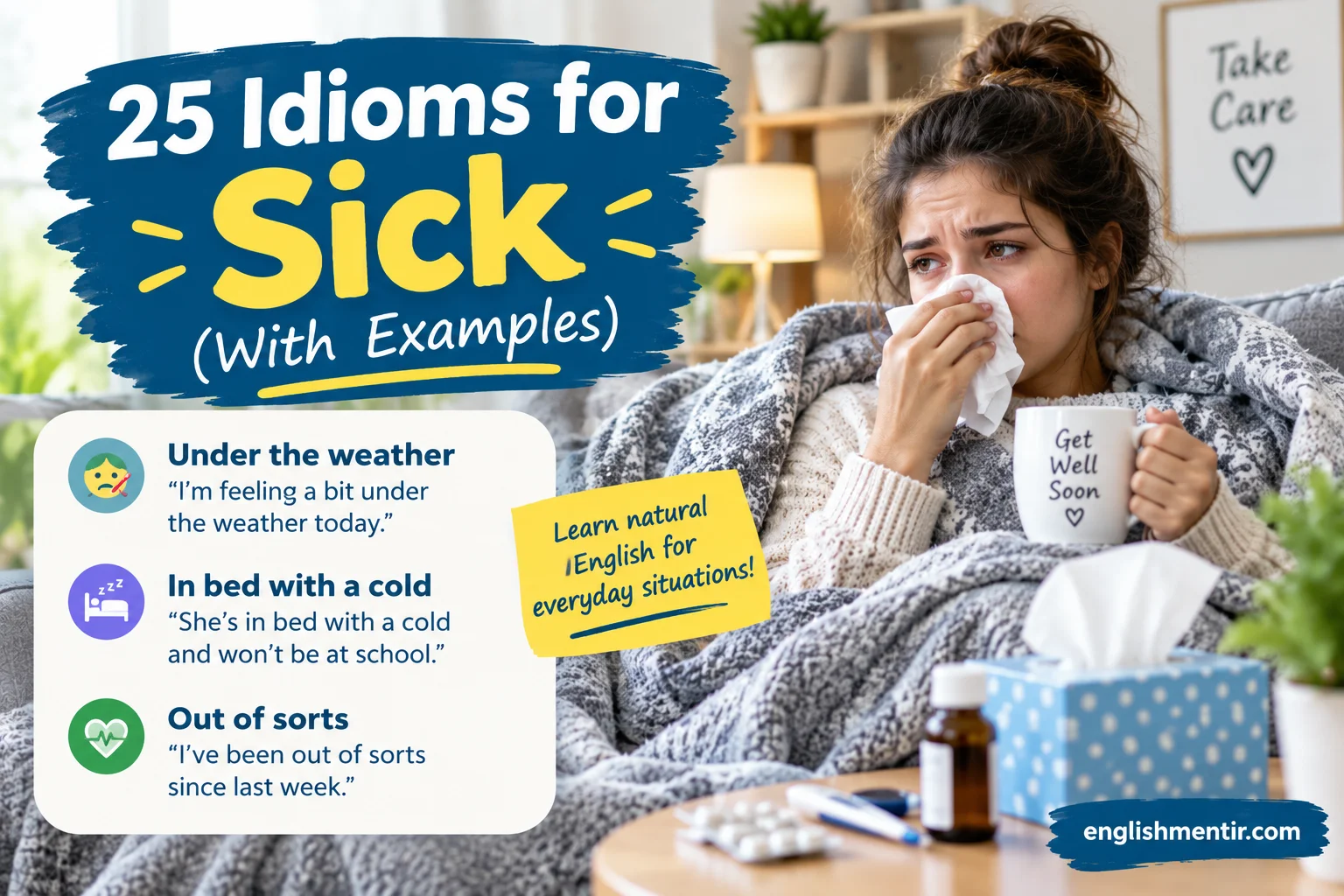
Learn 25 Idioms for Sick (With Examples) to describe feeling unwell, tired, or out of sorts in natural English conversations with confidence.
When feeling under the weather, sick days may bring body aches, sniffles, a mild headache, or a terrible flu. English speakers use idioms and special phrases to describe how they feel sick in natural, colorful, and emotionally expressive ways. For example, Sarah woke up feeling dizzy, with her head pounding like a drum, so she texted her friend, “I’m feeling really under the weather today.” Her friend instantly understood the phrase without a medical report.
For learners of English, mastering these expressions helps with natural-like conversation in daily life, literature, and workplace chatter. These idioms for feeling sick can make communication more native-like, fluent, confident, and relatable. People use them to talk about illness, physical discomfort, and health in real life, movies, and books. Learning idioms also helps you understand their meaning and use them naturally in sentences, making your speech more lively and expressive.
1. Under the Weather
Meaning: To feel sick, tired, or generally unwell.
In a Sentence: I have been under the weather since yesterday, so I am staying home.
Other Ways to Say: Feel unwell, feel sick, not feel well, be poorly.
2. Feeling Off-Color
Meaning: To feel slightly sick or not physically well.
In a Sentence: She looks off-color today and decided to rest.
Other Ways to Say: Feel unwell, feel poorly, feel sick, feel weak.
3. Feeling Rough
Meaning: To feel very unwell or physically uncomfortable.
In a Sentence: I am feeling rough after being sick all night.
Other Ways to Say: Feel terrible, feel awful, feel unwell, feel miserable.
4. Feeling Out of Sorts
Meaning: To feel unwell, uncomfortable, or not like yourself.
In a Sentence: I have been out of sorts all morning and need some rest.
Other Ways to Say: Feel unwell, feel strange, feel off, feel uncomfortable.
5. Down with Something
Meaning: To be sick with an illness, especially when the exact illness is not specified.
In a Sentence: Sarah is down with something, so she will not come to work today.
Other Ways to Say: Be sick, be ill, have an illness, come down with something.
6. Come Down With Something
Meaning: To become sick with an illness.
In a Sentence: I think I am coming down with something because I have a sore throat.
Other Ways to Say: Become sick, get ill, develop an illness, fall sick.
7. Catch a Bug
Meaning: To become sick, usually with a minor illness such as a cold or stomach problem.
In a Sentence: Tom caught a bug and has been resting at home.
Other Ways to Say: Get sick, catch an illness, become unwell, pick up a bug.
8. Have the Bug
Meaning: To have a minor illness, often one that is spreading among people.
In a Sentence: Several students have the bug this week.
Other Ways to Say: Have an illness, be sick, have a virus, feel unwell.
9. Sick as a Dog
Meaning: To feel extremely sick or ill.
In a Sentence: After eating that food, I was sick as a dog all night.
Other Ways to Say: Extremely sick, terribly ill, very unwell, feeling awful.
10. Feel Like Death
Meaning: To feel extremely ill, exhausted, or miserable.
In a Sentence: I feel like death after spending the night with a terrible fever.
Other Ways to Say: Feel terrible, feel awful, feel miserable, feel extremely ill.
11. Green Around the Gills
Meaning: To look pale, nauseous, or sick.
In a Sentence: You look green around the gills. Are you feeling okay?
Other Ways to Say: Look sick, look pale, look nauseous, look unwell.
12. Turn Green
Meaning: To become pale or green-looking because of nausea or sickness.
In a Sentence: He turned green when he smelled the spoiled food.
Other Ways to Say: Become nauseous, look sick, feel queasy, turn pale.
13. Lose Your Lunch
Meaning: A humorous way to say vomit.
In a Sentence: The rough boat ride made several passengers lose their lunch.
Other Ways to Say: Vomit, be sick, throw up, be nauseous.
14. Toss Your Cookies
Meaning: An informal and humorous expression meaning to vomit.
In a Sentence: I felt so sick that I almost tossed my cookies.
Other Ways to Say: Throw up, vomit, be sick, lose your lunch.
15. Blow Chunks
Meaning: A very informal expression meaning to vomit.
In a Sentence: He felt terrible after the meal and blew chunks later that evening.
Other Ways to Say: Vomit, throw up, be sick, get sick.
16. Bring Something Up
Meaning: A softer expression for vomiting something.
In a Sentence: She was feeling nauseous and brought up her dinner.
Other Ways to Say: Vomit, throw up, be sick, regurgitate.
17. On the Mend
Meaning: To be recovering from an illness.
In a Sentence: I am still tired, but I am on the mend now.
Other Ways to Say: Recovering, getting better, improving, healing.
18. Back on Your Feet
Meaning: To recover from sickness and return to normal activities.
In a Sentence: After a few days of rest, he was back on his feet.
Other Ways to Say: Recover, get better, regain strength, return to normal.
19. Knocked Flat
Meaning: To be made very weak or exhausted by an illness.
In a Sentence: The flu knocked me flat for almost a week.
Other Ways to Say: Make very sick, weaken, exhaust, lay low.
20. Laid Low
Meaning: To be confined to bed or greatly weakened because of illness.
In a Sentence: A severe cold laid him low for several days.
Other Ways to Say: Make bedridden, weaken, make sick, keep in bed.
21. Under the Knife
Meaning: To have or be about to have surgery.
In a Sentence: My uncle is under the knife tomorrow for a routine operation.
Other Ways to Say: Have surgery, undergo an operation, receive treatment.
22. A Touch of Something
Meaning: To have a small or mild amount of an illness.
In a Sentence: I have a touch of the flu, so I am going to take it easy today.
Other Ways to Say: A mild case, slight illness, a little sickness, minor symptoms.
23. Run a Fever
Meaning: To have a higher-than-normal body temperature, usually because of illness.
In a Sentence: The child is running a fever, so his parents are keeping an eye on him.
Other Ways to Say: Have a fever, have a temperature, be feverish.
24. Feeling Queasy
Meaning: To feel nauseous or as if you might vomit.
In a Sentence: I started feeling queasy during the long car journey.
Other Ways to Say: Feel nauseous, feel sick, feel unsettled, feel ill.
25. Feeling Under the Weather
Meaning: To feel slightly sick or not at your best.
In a Sentence: I am feeling under the weather, so I may go to bed early tonight.
Other Ways to Say: Feel unwell, feel sick, feel poorly, not feel well.
How to Use Idioms for Sick Naturally
When using idioms for sickness, think about the situation and the level of illness. Expressions such as under the weather, feeling rough, and feeling queasy work well in everyday conversations. More humorous phrases like toss your cookies and lose your lunch are better suited to casual conversations with people who understand your sense of humor.
For professional or serious situations, simple phrases such as feel unwell, have a fever, or recovering from an illness may sound more appropriate. If you are speaking to someone who is sick, combining an expression with kind and supportive words can make your message more thoughtful.
Exercise to Practice: 15 MCQs
1. What does “under the weather” mean?
A. Feeling excited
B. Feeling sick or unwell
C. Feeling angry
D. Feeling hungry
2. Which idiom means to become sick?
A. On the mend
B. Back on your feet
C. Come down with something
D. Under the knife
3. What does “sick as a dog” describe?
A. Being extremely sick
B. Being very happy
C. Being tired from work
D. Being hungry
4. Which expression means to vomit?
A. On the mend
B. Lose your lunch
C. Back on your feet
D. Run a fever
5. What does “on the mend” mean?
A. Becoming sick
B. Feeling confused
C. Recovering from an illness
D. Going to sleep
6. If someone is “green around the gills,” they may look:
A. Excited
B. Sick or nauseous
C. Angry
D. Relaxed
7. What does “run a fever” mean?
A. Have a high body temperature
B. Run very quickly
C. Feel energetic
D. Recover completely
8. Which idiom means recovering and becoming active again?
A. Back on your feet
B. Blow chunks
C. Laid low
D. Feel like death
9. “Feeling rough” means:
A. Feeling very well
B. Feeling unwell
C. Feeling hungry
D. Feeling sleepy after exercise
10. What does “under the knife” usually refer to?
A. Cooking
B. Surgery
C. Exercise
D. Shopping
11. Which expression means feeling nauseous?
A. Feeling queasy
B. On the mend
C. Back on your feet
D. Catch a break
12. “Catch a bug” usually means:
A. Catch an insect
B. Become sick
C. Recover quickly
D. Avoid illness
13. If an illness “knocked you flat,” it:
A. Made you very weak
B. Made you excited
C. Helped you recover
D. Made you laugh
14. Which expression describes a person recovering from illness?
A. Sick as a dog
B. On the mend
C. Blow chunks
D. Green around the gills
15. Which phrase is more humorous and informal?
A. Feel unwell
B. Have a fever
C. Toss your cookies
D. Recover from an illness
Answers
- B — Feeling sick or unwell
- C — Come down with something
- A — Being extremely sick
- B — Lose your lunch
- C — Recovering from an illness
- B — Sick or nauseous
- A — Have a high body temperature
- A — Back on your feet
- B — Feeling unwell
- B — Surgery
- A — Feeling nauseous
- B — Become sick
- A — Made you very weak
- B — On the mend
- C — Toss your cookies
FAQs:
1. What are idioms for being sick?
Idioms for being sick are common expressions that describe illness, feeling unwell, or needing rest in a more natural and conversational way.
2. What is a common idiom for feeling sick?
“Under the weather” is one of the most common idioms for feeling slightly sick, tired, or unwell.
3. Can I use these idioms in everyday conversations?
Yes. Most idioms for sick are useful in casual conversations, messages, and friendly communication. Choose the expression that best matches the situation.
4. Are these idioms suitable for English learners?
Yes. Learning these expressions can help English learners sound more natural and understand everyday conversations more easily.
5. How can I use sick idioms correctly?
Pay attention to the meaning and context of each idiom. Some describe mild illness, while others can express exhaustion, discomfort, or a need to recover.
Conclusion:
Learning 25 Idioms for Sick can make it easier to talk about illness and feeling unwell in a natural way. Expressions such as “under the weather” add variety and warmth to everyday English.
With regular practice, these idioms can improve your vocabulary, conversations, and communication skills. Try using them in simple sentences so their meanings become easier to remember and use correctly.