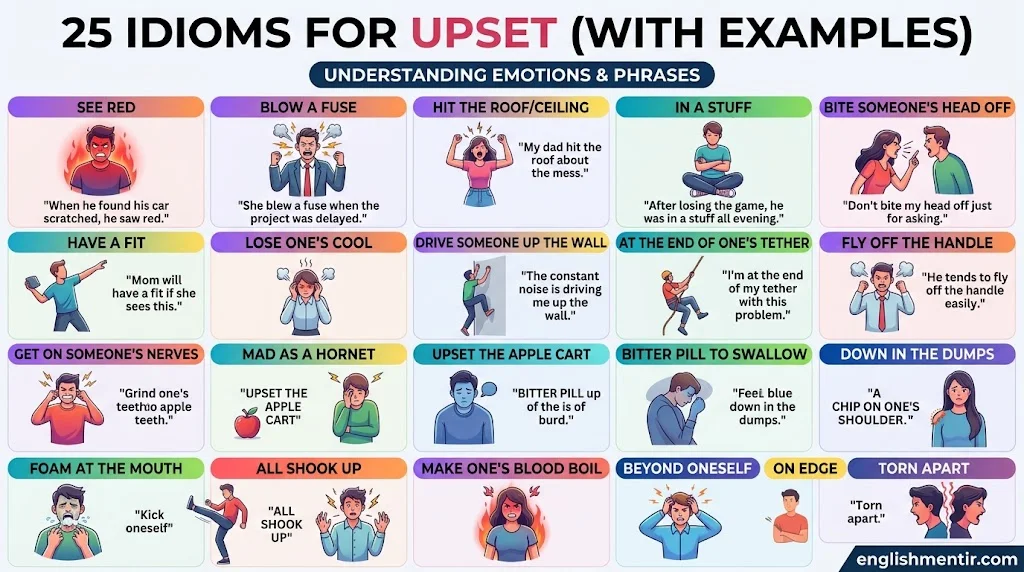
25 Idioms for Upset (With Examples) help express frustrated, stressed, heartbroken, sad, angry, or disappointed feelings when simple words are not enough. These idioms for upset add depth, emotion, and personality, making communication more natural, expressive, and relatable.
When being upset is difficult to describe, the right expression can show the intensity and type of emotion clearly. For example, Sarah missed her flight, her coffee spilled, and her laptop crashed one morning. She sighs and says “I’m upset,” but at my wit’s end shows her frustration with more feeling.
For English learners, learning these English idioms can improve vocabulary and speech. Expressions like feeling under the weather may sound literally connected to clouds, but they mean feeling sick. These colorful phrases work well in everyday conversations, writing, messages, and storytelling, helping everyone communicate feelings more naturally and confidently.
1. Feel Down
Meaning: To feel sad, unhappy, or emotionally low, usually for a period of time.
In a Sentence:
I have been feeling down since my friend moved to another city.
Other Ways to Say:
Feel sad, feel low, feel unhappy, be in a bad mood
2. Have a Heavy Heart
Meaning: To feel deep sadness or emotional pain.
In a Sentence:
She left the meeting with a heavy heart after hearing the disappointing news.
Other Ways to Say:
Feel deeply sad, feel sorrowful, feel heartbroken, carry sadness
3. Be Down in the Dumps
Meaning: To be very unhappy or discouraged.
In a Sentence:
He has been down in the dumps since his project was rejected.
Other Ways to Say:
Feel miserable, feel discouraged, feel low, be unhappy
4. Have a Chip on Your Shoulder
Meaning: To be angry or resentful because you believe you have been treated unfairly.
In a Sentence:
He has a chip on his shoulder because he feels his hard work was ignored.
Other Ways to Say:
Feel resentful, hold a grudge, feel bitter, be annoyed
5. Be in a Bad Mood
Meaning: To feel irritable, unhappy, or annoyed.
In a Sentence:
I am in a bad mood because I had a difficult morning.
Other Ways to Say:
Feel irritated, feel annoyed, be unhappy, be grumpy
6. Lose Your Cool
Meaning: To become angry and stop controlling your emotions.
In a Sentence:
Try not to lose your cool when someone disagrees with you.
Other Ways to Say:
Get angry, lose your temper, become irritated, snap
7. See Red
Meaning: To become extremely angry.
In a Sentence:
She saw red when she discovered that someone had taken credit for her work.
Other Ways to Say:
Become furious, get very angry, lose your temper, be enraged
8. Blow a Fuse
Meaning: To suddenly become very angry.
In a Sentence:
Dad blew a fuse when he found out that the car had been damaged.
Other Ways to Say:
Lose your temper, explode with anger, get furious, become enraged
9. Hit the Roof
Meaning: To become extremely angry about something.
In a Sentence:
My parents hit the roof when they heard about the broken window.
Other Ways to Say:
Get furious, become very angry, lose your temper, explode
10. Have Your Heart in Your Boots
Meaning: To feel very worried, frightened, or discouraged.
In a Sentence:
I had my heart in my boots when I could not find my younger brother.
Other Ways to Say:
Feel worried, feel frightened, feel anxious, feel discouraged
11. Be Sick at Heart
Meaning: To feel deeply sad, disappointed, or distressed.
In a Sentence:
She was sick at heart after learning that her old home would be demolished.
Other Ways to Say:
Feel heartbroken, feel deeply upset, feel sorrowful, feel distressed
12. Have a Broken Heart
Meaning: To experience deep emotional sadness, especially after losing someone or experiencing a painful relationship.
In a Sentence:
He had a broken heart after the relationship ended.
Other Ways to Say:
Feel heartbroken, feel devastated, feel deeply hurt, feel crushed
13. Cry Over Spilled Milk
Meaning: To remain upset about something that has already happened and cannot be changed.
In a Sentence:
There is no use crying over spilled milk; we can learn from the mistake and move forward.
Other Ways to Say:
Dwell on the past, regret what happened, focus on a mistake, worry about the past
14. Have a Long Face
Meaning: To look sad, disappointed, or unhappy.
In a Sentence:
Why do you have such a long face today?
Other Ways to Say:
Look sad, look disappointed, look unhappy, look gloomy
15. Feel Blue
Meaning: To feel sad or emotionally low.
In a Sentence:
I was feeling blue after saying goodbye to my family.
Other Ways to Say:
Feel sad, feel down, feel low, feel unhappy
16. Get Under Someone’s Skin
Meaning: To annoy or irritate someone repeatedly.
In a Sentence:
His constant interruptions really get under my skin.
Other Ways to Say:
Annoy someone, irritate someone, bother someone, frustrate someone
17. Rub Someone the Wrong Way
Meaning: To make someone feel annoyed, uncomfortable, or upset.
In a Sentence:
Her rude comments rubbed me the wrong way.
Other Ways to Say:
Annoy someone, upset someone, bother someone, irritate someone
18. Get on Someone’s Nerves
Meaning: To annoy someone, especially repeatedly.
In a Sentence:
The loud music is really getting on my nerves.
Other Ways to Say:
Annoy someone, irritate someone, bother someone, frustrate someone
19. Blow Off Steam
Meaning: To release anger, stress, or frustration by talking, exercising, or doing another activity.
In a Sentence:
I went for a walk to blow off steam after a stressful day.
Other Ways to Say:
Release frustration, let out emotions, relax, reduce stress
20. Bottle Up Your Feelings
Meaning: To hide or suppress emotions instead of expressing them.
In a Sentence:
You should not bottle up your feelings when something is bothering you.
Other Ways to Say:
Hide your emotions, suppress your feelings, keep feelings inside, hold emotions back
21. Lose Sleep Over Something
Meaning: To become so worried or upset about something that it affects your sleep.
In a Sentence:
Don’t lose sleep over one small mistake.
Other Ways to Say:
Worry about something, stress over something, feel anxious, be concerned
22. Have a Bee in Your Bonnet
Meaning: To be annoyed or strongly concerned about a particular idea or issue.
In a Sentence:
She has a bee in her bonnet about people arriving late.
Other Ways to Say:
Be bothered, be obsessed with an issue, be concerned, be irritated
23. Take Something to Heart
Meaning: To become deeply affected or upset by something someone says or does.
In a Sentence:
Try not to take his criticism to heart; he was having a difficult day.
Other Ways to Say:
Take personally, feel hurt, be deeply affected, feel sensitive about something
24. Have a Bone to Pick
Meaning: To have a complaint or disagreement that you want to discuss with someone.
In a Sentence:
I have a bone to pick with you about what happened yesterday.
Other Ways to Say:
Have a complaint, want an explanation, have an issue, want to discuss a problem
25. Be at the End of Your Rope
Meaning: To feel extremely frustrated, stressed, or unable to cope with a situation.
In a Sentence:
After weeks of dealing with the same problem, I was at the end of my rope.
Other Ways to Say:
Feel overwhelmed, feel exhausted, feel frustrated, reach your limit
How to Choose the Right Idiom for Being Upset
Not every expression for being upset describes the same emotion. If you are mildly sad, phrases such as feel blue or feel down can sound natural. If you are extremely angry, see red, hit the roof, or blow a fuse may fit better.
For emotional pain, have a heavy heart and have a broken heart express deeper sadness. When frustration comes from repeated problems, get on someone’s nerves, blow off steam, or be at the end of your rope can communicate the situation more clearly.
When speaking with someone who is already upset, choose words with care and empathy. Idioms can make communication more expressive, but the best expression is always the one that accurately matches the person’s feelings and situation.
Exercise: Practice Idioms for Upset
Choose the best answer for each question.
1. What does “feel blue” mean?
A. Feel excited
B. Feel sad
C. Feel hungry
D. Feel confident
2. If someone “sees red,” they are usually:
A. Very happy
B. Very tired
C. Extremely angry
D. Confused
3. What does “have a heavy heart” describe?
A. Deep sadness
B. Physical strength
C. Excitement
D. Confidence
4. If someone is “down in the dumps,” they feel:
A. Proud
B. Sad or discouraged
C. Energetic
D. Relaxed
5. What does “lose your cool” mean?
A. Become angry
B. Become sleepy
C. Become successful
D. Become curious
6. If something “gets under your skin,” it:
A. Makes you laugh
B. Annoys you
C. Helps you relax
D. Makes you famous
7. What does “blow off steam” mean?
A. Hide your emotions
B. Release stress or frustration
C. Become more worried
D. Avoid everyone
8. “Bottle up your feelings” means:
A. Express your emotions openly
B. Forget your emotions
C. Keep your emotions inside
D. Celebrate your emotions
9. What does “cry over spilled milk” suggest?
A. Celebrate a mistake
B. Worry about something that cannot be changed
C. Make a new plan
D. Forget everything immediately
10. Someone who is “at the end of their rope” may feel:
A. Overwhelmed
B. Excited
C. Relaxed
D. Amused
11. What does “take something to heart” mean?
A. Ignore something completely
B. Become deeply affected by it
C. Laugh about it
D. Forget it quickly
12. If a person “has a bone to pick” with someone, they:
A. Want to complain or discuss a problem
B. Want to give a gift
C. Want to celebrate
D. Want to apologize for nothing
13. What does “have a long face” mean?
A. Look happy
B. Look sad or disappointed
C. Look surprised
D. Look confident
14. If someone is “losing sleep over” something, they are:
A. Excited about it
B. Worried about it
C. Laughing about it
D. Forgetting about it
15. What does “rub someone the wrong way” mean?
A. Make someone feel annoyed or uncomfortable
B. Make someone feel proud
C. Help someone succeed
D. Make someone feel relaxed
Answers
- B — Feel sad
- C — Extremely angry
- A — Deep sadness
- B — Sad or discouraged
- A — Become angry
- B — Annoy you
- B — Release stress or frustration
- C — Keep your emotions inside
- B — Worry about something that cannot be changed
- A — Overwhelmed
- B — Become deeply affected by it
- A — Want to complain or discuss a problem
- B — Look sad or disappointed
- B — Worried about it
- A — Make someone feel annoyed or uncomfortable
FAQs:
1. What are idioms for upset?
Idioms for upset are colorful English phrases used to express sadness, frustration, disappointment, worry, or emotional pain in a more natural way.
2. Why should I use idioms for upset?
They can make your speech, writing, and everyday conversations more expressive and help you communicate emotions without using the same simple words repeatedly.
3. What is an idiom for feeling very upset?
At my wit’s end is a useful idiom for feeling extremely frustrated or unable to deal with a difficult situation.
4. Can English learners use these idioms?
Yes. English learners can use these expressions to improve their vocabulary and make their communication sound more natural and confident.
5. Are idioms for upset suitable for formal writing?
Some idioms work better in casual conversations, messages, and storytelling. In formal writing, choose expressions that match the tone and situation.
Conclusion:
Learning 25 Idioms for Upset (With Examples) gives you more ways to express difficult emotions clearly and naturally. Instead of repeatedly saying you are sad, angry, or disappointed, you can choose an idiom that better matches your feelings.
These expressions can also make your English more natural, expressive, and relatable. With regular practice, you can use the right idiom confidently in conversations, writing, messages, and everyday situations.